
The historically significant Hauberge (coppice forests) of the region have, in some areas, become overgrown over the past decades, gradually losing their characteristic structures. Other areas are now managed in a way that allows individual veteran trees to remain within the stand, creating a high degree of structural diversity. This form of management remains closely linked to traditional Hauberg use but is deliberately extended by retaining certain veteran trees to support species dependent on old wood. Such stands thus provide an important refuge for a variety of species.
Coppice-with-standards forestry combine features of coppice forestry, such as firewood production, with long-term stand development objectives, similar to high forest management. This combined management approach offers a sustainable alternative to classical coppice use, with high value for local biodiversity, and is therefore at the core of our project.
Overview of Implemented Measures
Inventory of all coppice areas
Coppice and Hauberg management have a long tradition in the Siegerland region and are a defining feature of the cultural landscape. Today, however, these historical forest management practices play only a minor role in modern forestry. During the course of the project, it became apparent that many former coppice areas have since developed towards high forest.
To capture the current state of both former and still-managed Hauberge, a comprehensive mapping was conducted within the project, and the respective management histories were analyzed. Based on this information, a prioritization map was created, which can serve as a planning tool for future measures.
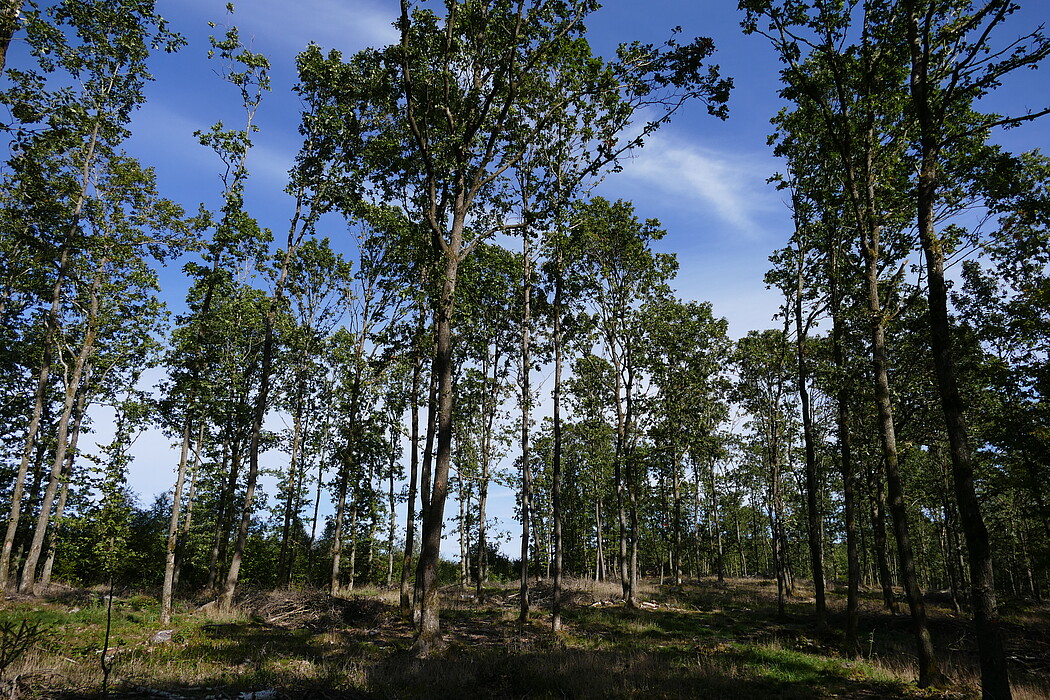
Coppice forest with standards
Supervision of a master’s thesis
To continue historical forest management systems such as coppice or Hauberg management, it is important to identify potential income sources for forest owners. One key element could be the sale of firewood. In cooperation with the University of Hildesheim, a Master’s thesis was conducted within the project to evaluate the potential market for firewood.
Titled “Hauberg 2.0 – A Qualitative Study on Reactivating a Historical Forest Management System Regarding Implementation and Financing”, the Master’s thesis by Yasmin Günterberg was submitted on February 12, 2025.
The thesis examined the implementation and financing possibilities of such an initiative, aiming to maintain this traditional form of forest management at least cost-neutral over the long term. This is envisioned to be achieved through specialized marketing of the firewood.
Methodologically, the study is based on interviews with actors from existing coppice and low-forest projects, as well as a market analysis of firewood sales. The research shows that successful implementation strongly depends on stakeholder acceptance, communication strategy, appropriate wildlife management, and the availability of funding programs and financing options.
Currently, there are no nationwide strategies or support programs for coppice and low-forest systems. For long-term preservation, uniform conservation concepts should be developed, and the nationwide inclusion of coppice and low-forest areas in the respective state contract-based nature conservation programs should be pursued. Until then, developing a firewood marketing strategy for Hauberg areas represents a viable approach. Whether this can be implemented cost-neutrally in practice should be tested in a pilot phase, which could be conducted within the Hauberg 2.0 project in collaboration with a regional marketer.
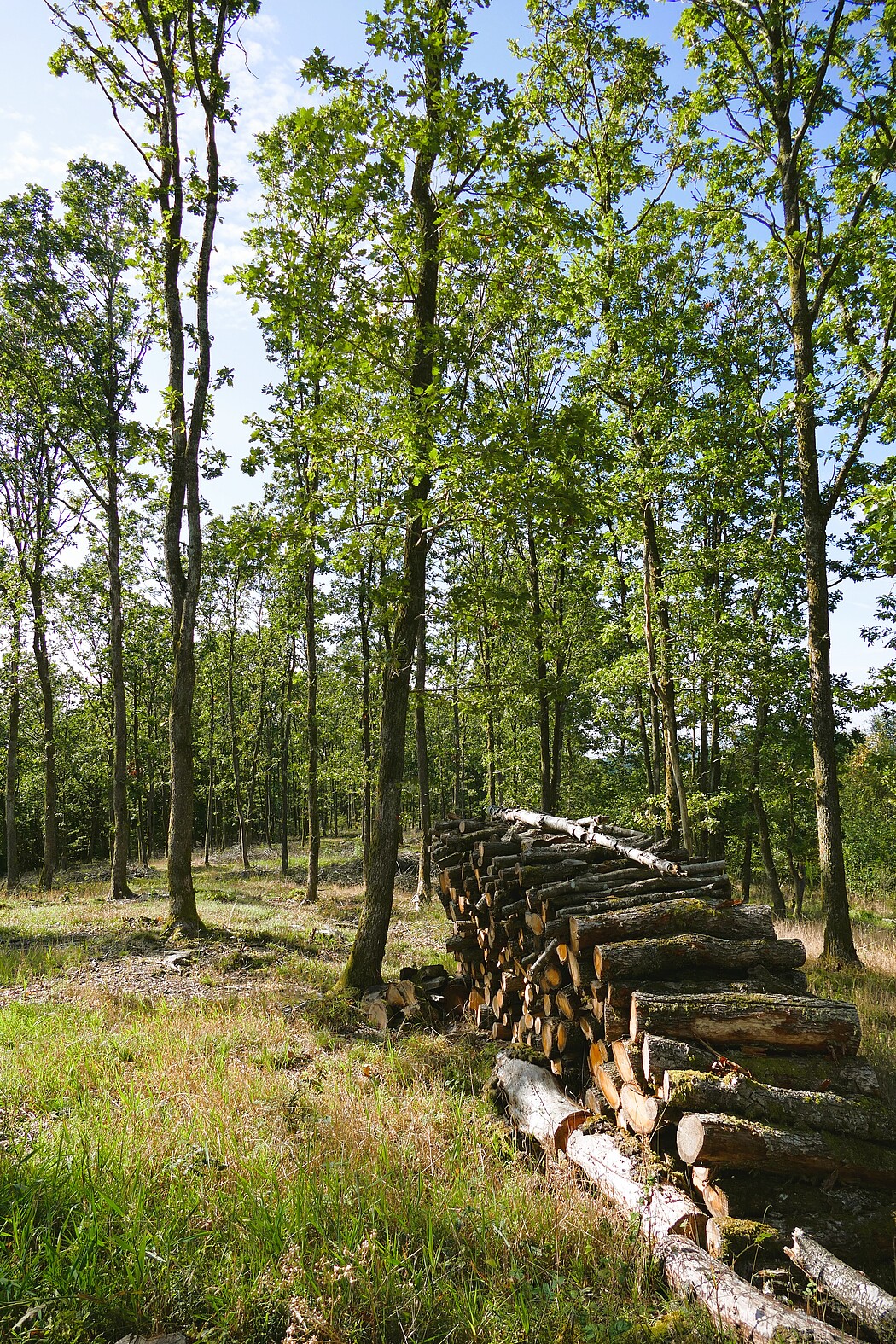
Firewood Production in the Hauberg
Development of a concept proposal
As part of the implementation concept Hauberg 2.0, various approaches were developed for the targeted canopy opening of forest stands to promote oak regeneration and create structurally diverse forests:
Point-wise canopy opening with small gaps
Small light gaps, typically sized 30 × 30 × 42 m (approximately 450 m²), are created in which the canopy is completely removed. This method offers the lowest wind exposure for the remaining trees and is particularly suitable for establishing regeneration islands in oak forests, provided that light availability is sufficient (see Figure B).
Strip-wise canopy opening
In strips approximately 20 m wide, the canopy cover is reduced by around 50% (see Figure C). This method is especially suitable for wind-exposed stands and provides a good balance between light availability and stand stability.
Patch-wise canopy opening
In this approach, approximately 20–80% of the canopy cover is removed over larger areas (see Figure D). This method provides large amounts of light but can, depending on the stand structure, increase the wind vulnerability of the remaining trees.
Enclosure concepts
To promote natural regeneration, enclosures can be installed on all areas, either small enclosures (“small pens”) in the form of triangles or squares with three to four elements, or large enclosures covering entire stands or partial areas.
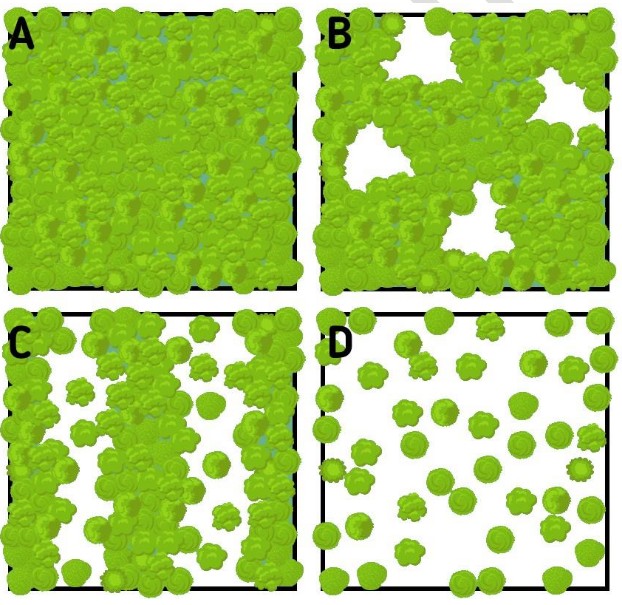
Schematic representation of approaches for establishing a Hauberg management system with remaining trees on a 1 ha area. A: full stocking; B: point-wise canopy opening using small gaps; C: strip-wise canopy opening through clear-strip felling; D: patch-wise canopy opening.
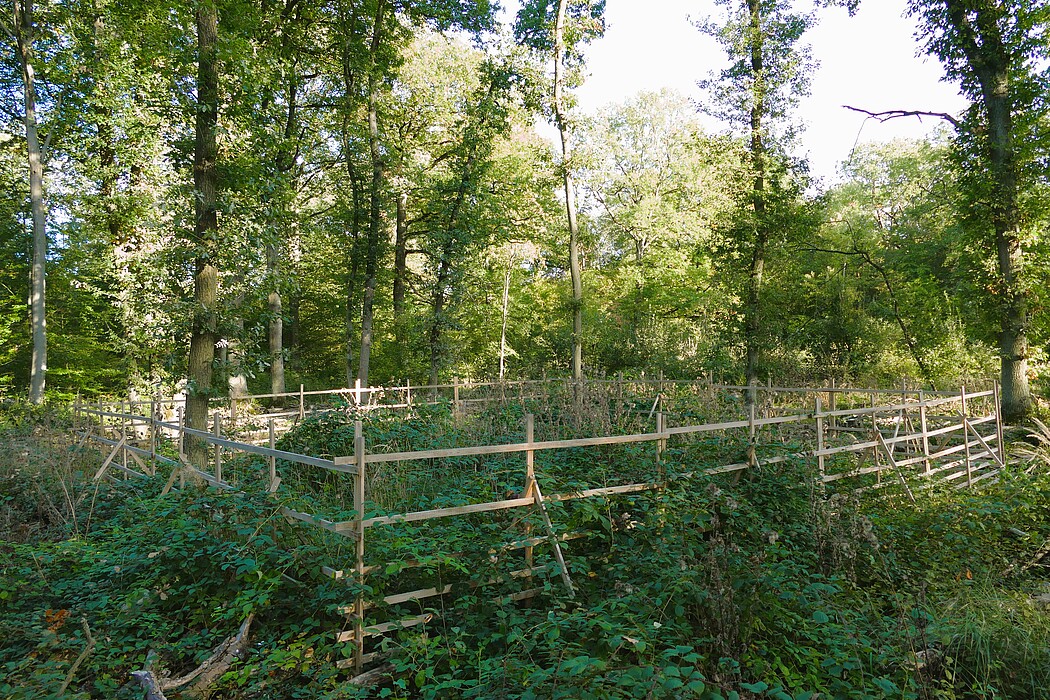
Enclosures to protect natural regeneration from wildlife
Development of a marketing logo
To visually summarize our goals and motivations, we developed a logo that unites all central aspects of the Hauberg 2.0 concept.
Middle spotted woodpecker: oak-rich forests are particularly valuable from an ecological perspective. To preserve the middle spotted woodpecker, the promotion of old oaks and subsequent generations of oaks is of central importance.
Oaks: through forest management of the oaks using light and shade regulation (femel felling), not only is the development of accompanying tree species in the second canopy layer supported, but the structural diversity of the stand is also promoted. Emerging light shafts increase bioproduction, e.g., through better sunlight exposure and the so-called edge-line effect.
Arthropods: such light-flooded forest structures provide diverse habitats and enhance the availability of arthropods as an important food source for numerous species.
Firewood: the long-term goal is the development of a structurally rich stand with old oaks. Targeted understory use, particularly through the removal of accompanying tree species, can contribute to sustainable firewood production.
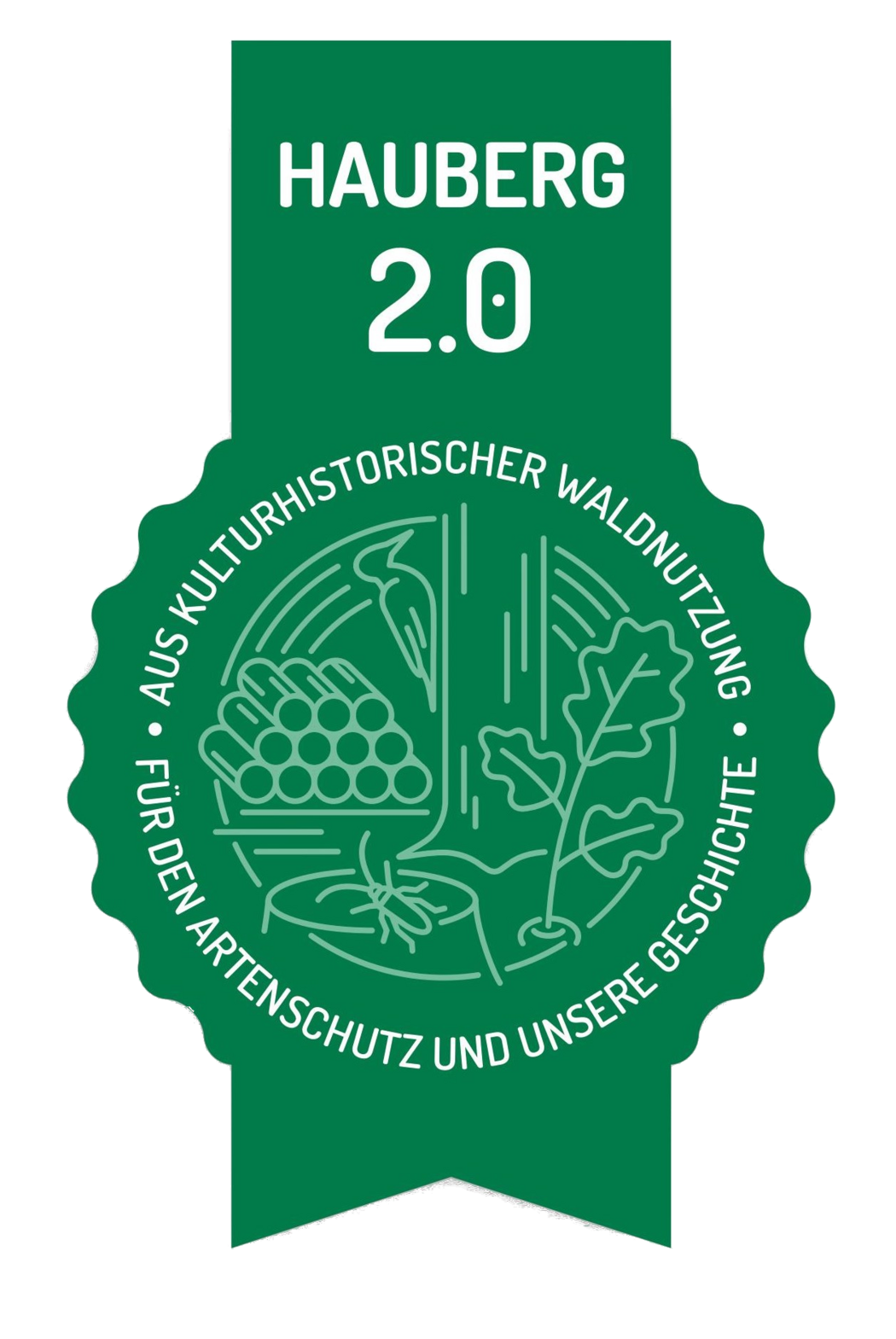
Hauberg 2.0 – Concept logo
Agreement for the promotion of Hauberg management with standards
As part of the LIFE project, an agreement is currently being developed between forest owners and the project coordinator with the goal of promoting oak regeneration within coppice management in Hauberg areas. This is achieved either through the enclosure of areas with natural regeneration or the targeted replanting of site-typical and sprouting-capable deciduous trees within the EU Special Protected Area "Wälder und Wiesen bei Burbach und Neunkirchen" (DE 5214-401).
Eligible areas include those where Hauberg or coppice management is currently practiced or where reactivation is planned. A requirement is that these stands consist predominantly of sprouts and have been thinned in the year of the contract signature, either through shelterwood cutting with 20–80% canopy cover (standards) or small-scale canopy openings (point-wise canopy opening). The choice of thinning method is at the discretion of the owner. Simultaneous participation in other public funding programs is excluded.
The project coordinator covers the costs of planting material, including browsing protection or enclosures. In addition, the Biological Station Siegen-Wittgenstein supervises the measures on a sampling basis on-site and documents the development of the areas.
In return, the owner commits to maintain the browsing protection or enclosures throughout the duration of the agreement, to regularly check them, and to remove them properly when no longer needed. In addition, any encroaching coniferous trees must be removed from the areas.
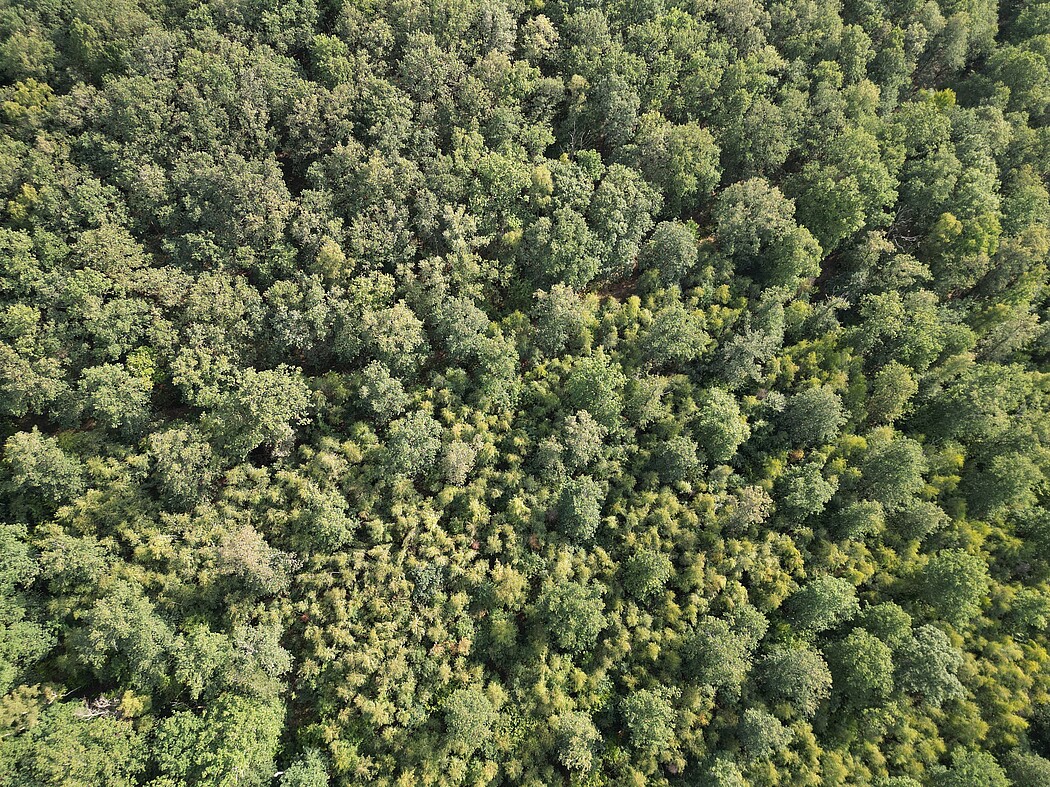
Drone image of a Hauberg with standards